
Commercial Rooftop PV: Why South Is Not Always Best
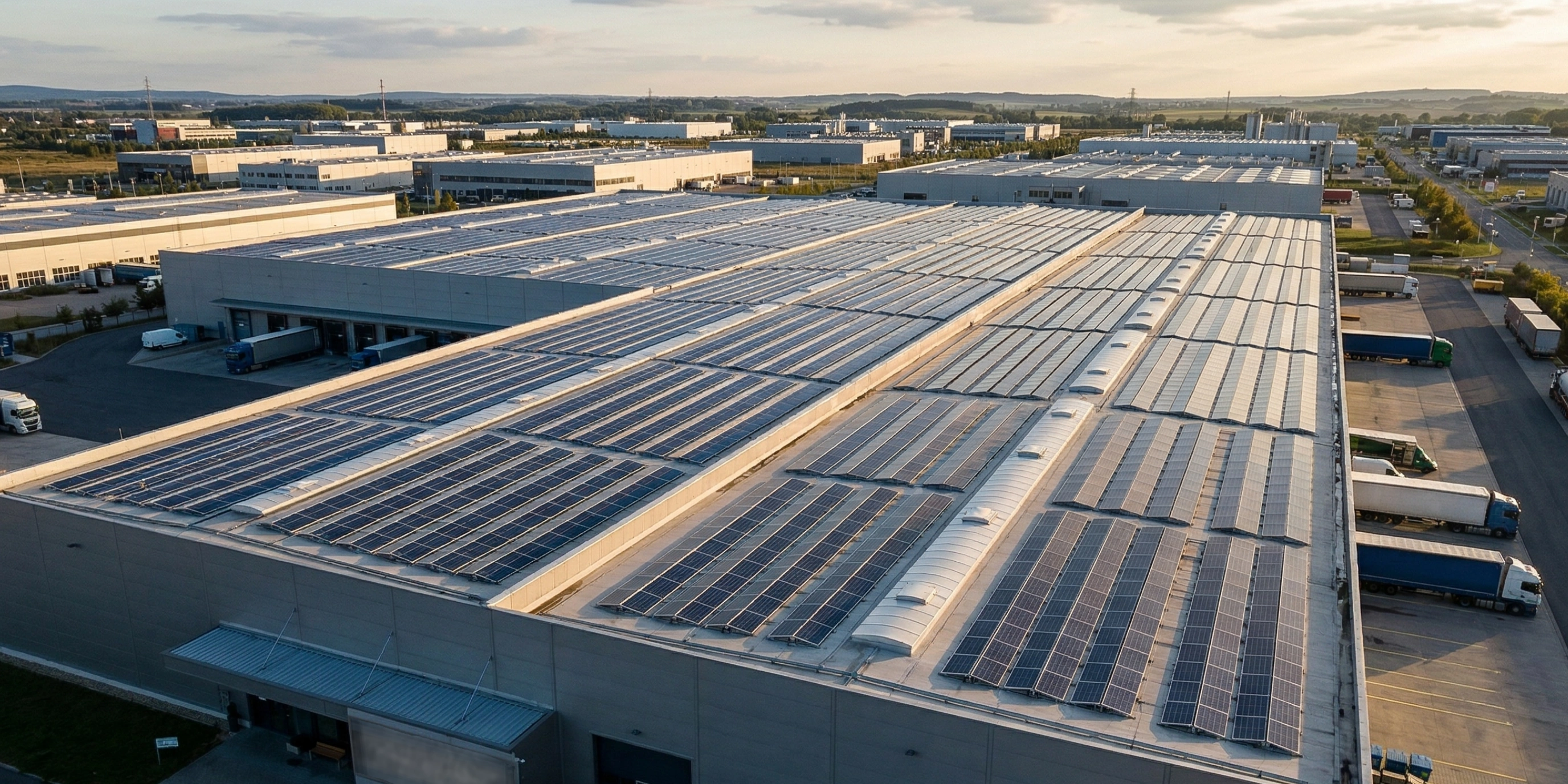
South-facing panels do not always mean the best result. In commercial rooftop PV, east-west may work better for self-consumption, EMS and BESS.
In this article
Key takeaways
- ✓ A practical example of a solution in real operation
- ✓ Connected to a specific service or technology
- ✓ Suitable for companies, construction sites, campuses and public buildings
Table of contents
Next step
Request a solutionWhen people think about commercial rooftop PV, they often assume there is one obvious answer: put the panels on the south-facing side. But on warehouses, industrial halls and commercial buildings, it is rarely that simple. The orientation that gives the highest annual generation is not always the one that delivers the best result for self-consumption, operational peaks, BESS or control through EMS/SCADA.
That is why, when designing commercial PV systems, the key question is not just where the roof faces, but how the system should work for the actual operation of the site.
The short answer: south is not wrong, but it is not automatically the best
South-facing PV often delivers the highest annual production. That still does not mean it is the best option for every business.
On industrial halls, warehouses, logistics sites and production buildings, what often matters more is:
- when the PV system generates electricity,
- how well production matches the load profile,
- what happens during morning and afternoon demand periods,
- whether BESS will be part of the solution,
- and whether the system generates most of its power at the exact time when the site can use the least of it.
That is why, for many commercial roofs, east-west orientation can make more sense than a pure south-facing layout.
What roof orientation means in practice for a commercial PV system
In simplified terms:
South-facing orientation
- often maximises annual output,
- pushes more generation into midday hours,
- may work well where demand is strongest around noon,
- is useful where the priority is to generate as much energy as possible from limited roof space.
East-west orientation
- usually spreads production more across the morning and afternoon,
- can better match sites that operate from early morning to late afternoon,
- helps soften the sharp midday production peak,
- may improve self-consumption and reduce pressure on exports.
In other words: the best roof orientation is not the one that looks best in an annual yield table, but the one that delivers the best operational result.
Why east-west often makes sense on industrial halls
Commercial and industrial buildings usually behave very differently from residential properties.
A typical business operation:
- starts in the morning,
- runs through working hours,
- often has two stronger periods during the day,
- and does not always consume the most energy at midday.
That is why east-west orientation can be attractive where the goal is:
- earlier generation in the morning,
- longer useful production later in the day,
- a less aggressive midday production spike,
- better alignment with the real operating profile of the hall, warehouse or facility.
This matters especially where a company is focused on:
- a high level of self-consumption,
- limited export possibilities,
- integration with energy management (EMS/SCADA),
- or a future combination with battery energy storage (BESS).
When south-facing orientation is still the right choice
To be clear: south-facing PV still makes excellent sense in many projects.
It is often the right option when:
- the priority is to maximise annual energy production on limited roof space,
- the building consumes the most electricity around midday,
- the project economics work well without more advanced control logic,
- the roof or structure does not offer many alternative layout options,
- the investor wants to maximise volume rather than optimise the generation profile.
So the right question is not: “Is south-facing good?”
The right question is: “Is south-facing good for our specific operation?”
When east-west may be better than south
East-west often makes more sense when:
1. The site needs power from early morning to late afternoon
Generation spread across a wider part of the day may better cover real consumption than a sharp noon peak.
2. The company wants to improve self-consumption
When production better matches the daily operation, less energy may be pushed into less valuable hours.
3. The project includes BESS or EMS
Where the design includes EMS/SCADA or BESS, it is not only the total energy volume that matters, but also the generation profile and how the system can work with it.
4. The roof is large and flat
On some large commercial roofs, the layout logic, service corridors and total use of space can also influence whether east-west is the better choice.
Why PV today is not just about panels
In commercial projects, PV is no longer just about:
- panels,
- inverters,
- and “some generation”.
What matters is the whole system:
- how it connects to the building,
- what the load data shows,
- how switchboards are handled,
- whether BESS makes sense,
- whether EMS/SCADA is needed,
- how electrical inspections will be handled,
- and whether the project will still make sense when the site grows in the future.
That is why the weak approach is: “there is space on the roof, so let’s just install south-facing panels.”
The strong approach is: “let’s evaluate the load profile, operation, orientation, roof area, control logic and future development.”
What should be evaluated before choosing the roof orientation
Before deciding between south-facing and east-west, it makes sense to evaluate:
- the daily load profile,
- operating hours and production regime,
- seasonal differences in generation and consumption,
- the size and shape of the roof,
- the technical condition of the roof and electrical infrastructure,
- export limitations and operating constraints,
- possible integration with BESS,
- the need for EMS/SCADA,
- future expansion of the site and its technologies.
Without this, roof orientation is chosen more by assumption than by project logic.
Commercial PV on a hall and its connection to BESS
This is becoming more and more important. If a company is dealing with:
- midday production peaks,
- higher self-consumption,
- export limits,
- backup for selected circuits,
- or future flexibility,
then it makes sense not to design PV as a standalone system, but together with battery energy storage (BESS).
At that point, the main question is no longer just: “How many panels fit on the roof?”
It becomes:
- what production profile do we want,
- how will energy be controlled,
- what will be consumed directly,
- what will be stored,
- and what value will this bring to the operation?
Why EMS/SCADA matters in larger PV projects
For smaller installations, basic monitoring may be enough. In larger commercial systems, that is often not sufficient.
EMS/SCADA becomes valuable when the site needs to:
- analyse real operational data,
- manage the interaction between PV and BESS,
- protect the facility from demand spikes,
- prioritise selected circuits,
- and treat energy as an actively managed part of the operation.
Without control, even a technically good PV system can remain unnecessarily “blind”.
The most common mistakes in commercial rooftop PV design
“South-facing is always best.”
It is not. It is best only in certain scenarios.
“It is enough to maximise annual production.”
It is not. The time profile of generation and its real usability for the operation matter too.
“Monitoring is the same as control.”
It is not. Monitoring shows what is happening. EMS/SCADA determines how the system responds.
“Battery storage can be considered later.”
Sometimes yes, but in many cases it is better to consider BESS already during the overall design phase.
“PV is only about panels.”
It is not. It is also about the roof, the structure, the electrical side, switchboards, protection, metering, control, inspections and future operation.
What makes sense to solve as one integrated system
In commercial projects, it usually makes sense to treat the following as one connected whole:
- PV systems,
- BESS,
- EMS/SCADA,
- switchboards,
- electrical inspections,
- and any other connected systems depending on the site.
That is how you get a system that is not only installed, but actually works for the operation.
FAQ: What businesses most often ask about PV roof orientation
Is south-facing still the highest-yield option?
Often yes in terms of annual production, but not always the most beneficial in terms of self-consumption and operation.
Is east-west a good option for industrial halls?
Very often yes, especially where a broader production curve during the day matches the load profile better.
When does it make sense to consider BESS already during PV design?
When the company is dealing with export limits, peak shaving, backup for selected circuits or wants to extract more value from generation than immediate self-consumption.
Is monitoring enough, or is EMS needed?
In larger projects or where the operating logic is more complex, EMS/SCADA is often far more useful than monitoring alone.
Can you evaluate whether south-facing or east-west is better for our roof?
Yes. That is exactly the basis of a properly designed commercial PV project.
Commercial PV that makes sense operationally and economically
The best roof orientation is not a universal rule. It is the result of good design.
Sometimes south-facing will be the best choice.
Sometimes east-west.
And in some projects, the decisive factor will only appear once BESS, EMS/SCADA, the electrical infrastructure or future expansion are taken into account.
That is why commercial PV should be designed as part of a wider energy system, not as an isolated technology placed on the roof.
Planning commercial rooftop PV for a warehouse, factory or industrial site? Explore our commercial PV systems, battery energy storage BESS, energy management EMS/SCADA or contact us via contact. We will design the solution based on your load profile, roof layout and long-term operational goals.
Solution consultation
Working on a similar project?
Get in touch with us. We will suggest a suitable technical solution based on the location, operation and requirements.
Related service
This article is related to Our services
If you are dealing with a similar project in practice, continue to the service detail or send us the basic project parameters.
Keep reading
Related articles
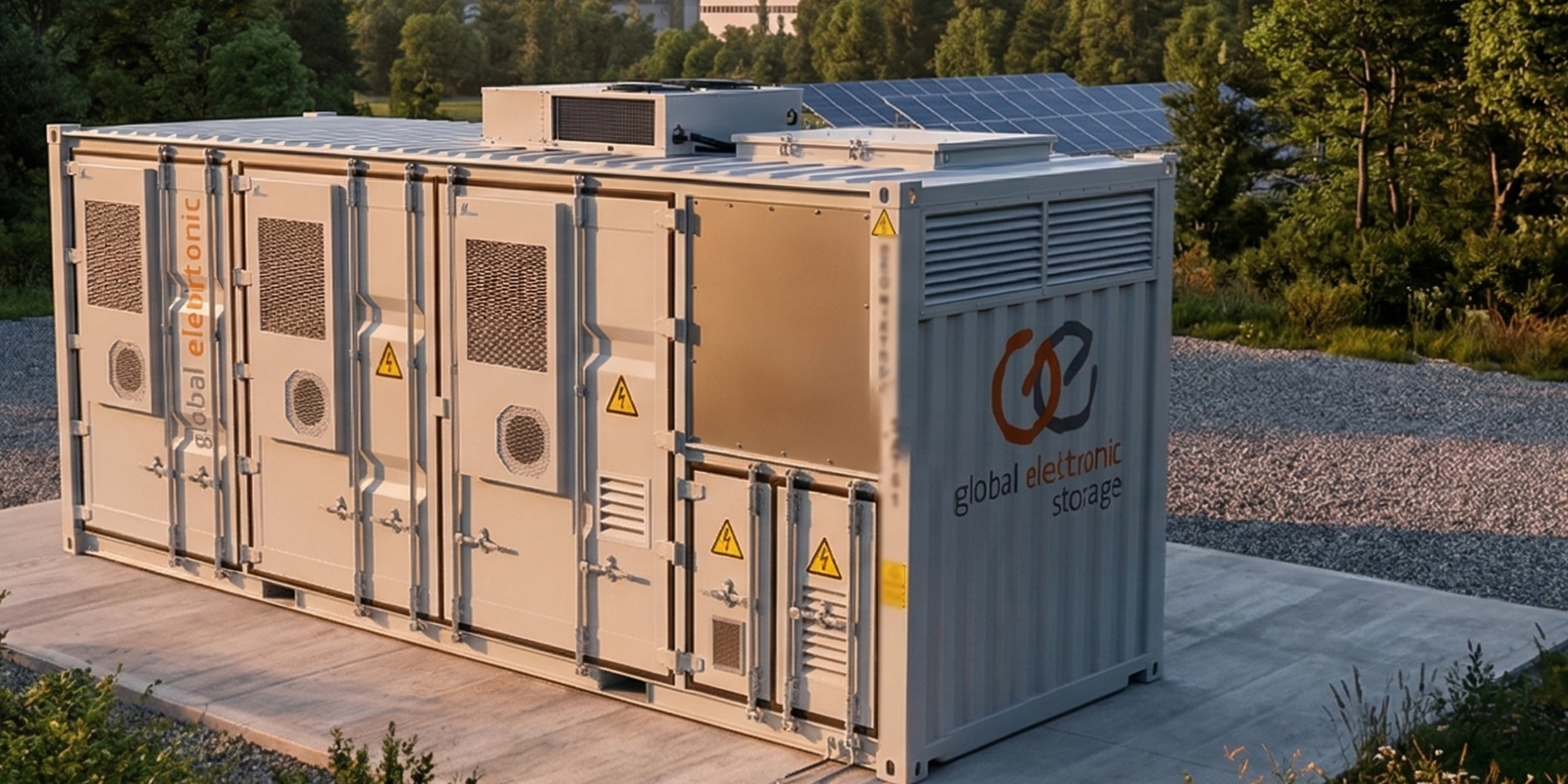
BESS for Businesses: When Battery Storage Makes Sense
BESS for businesses is more than backup power—peak shaving, PV integration, EMS/SCADA, operational stability and site security in one system

Custom switchboard for the exact building: why universal solutions are not enough
Custom switchboards for companies, homes, schools, PV and operations. Why design, production, labelling, testing and service matter.
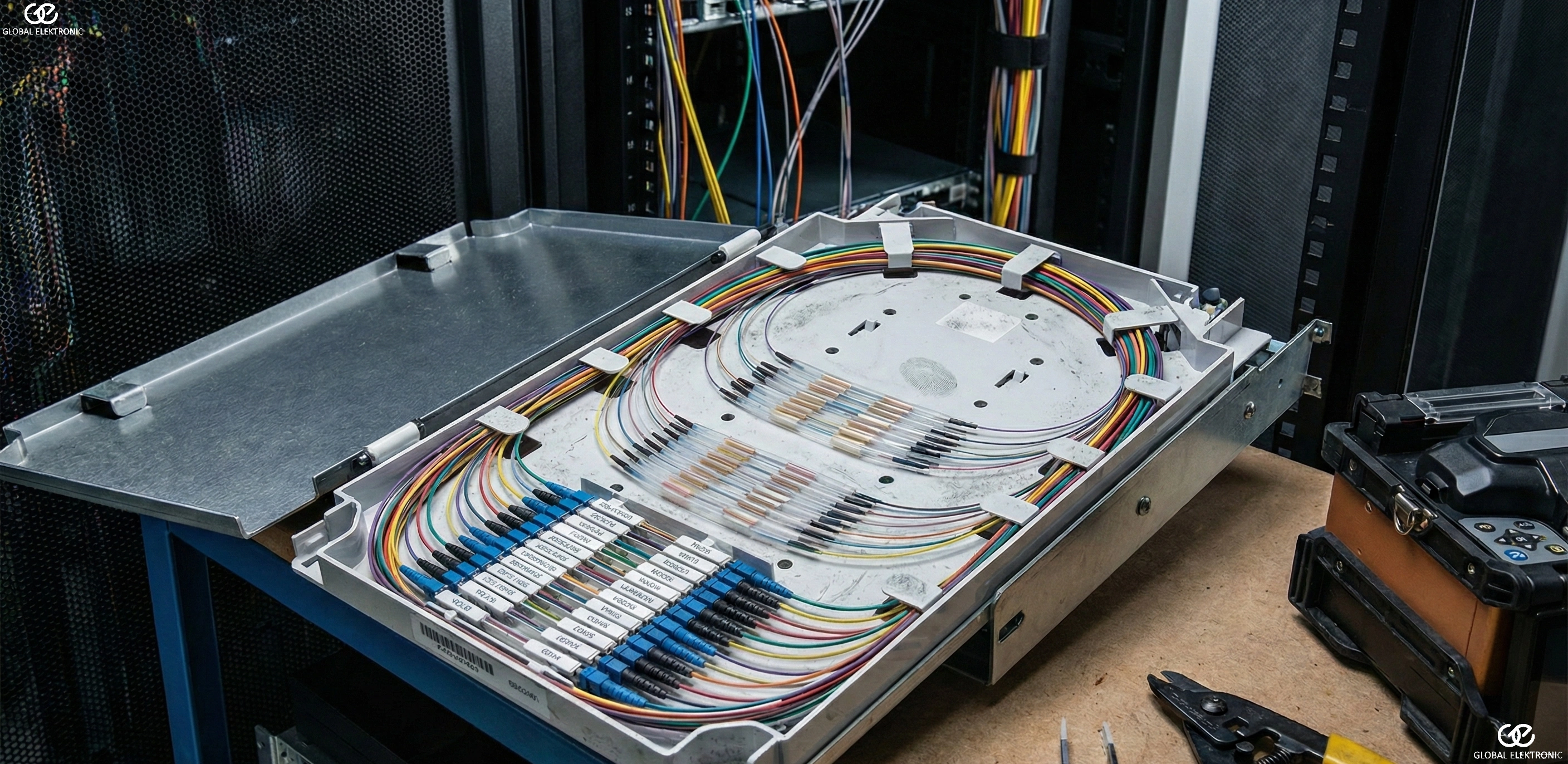
Fibre optic links for companies and development projects: design, pulling, splicing and testing
Fibre links for companies and developers: route design, pulling fibre, splicing, outdoor routes, PV, racks and fibre testing.
