
Correct lighting in production, warehouses and offices: standards, mistakes and risk-reducing audits
Lighting for production, warehouses and offices: standards, H&S, common mistakes, risks and a lighting audit as the first step.
In this article
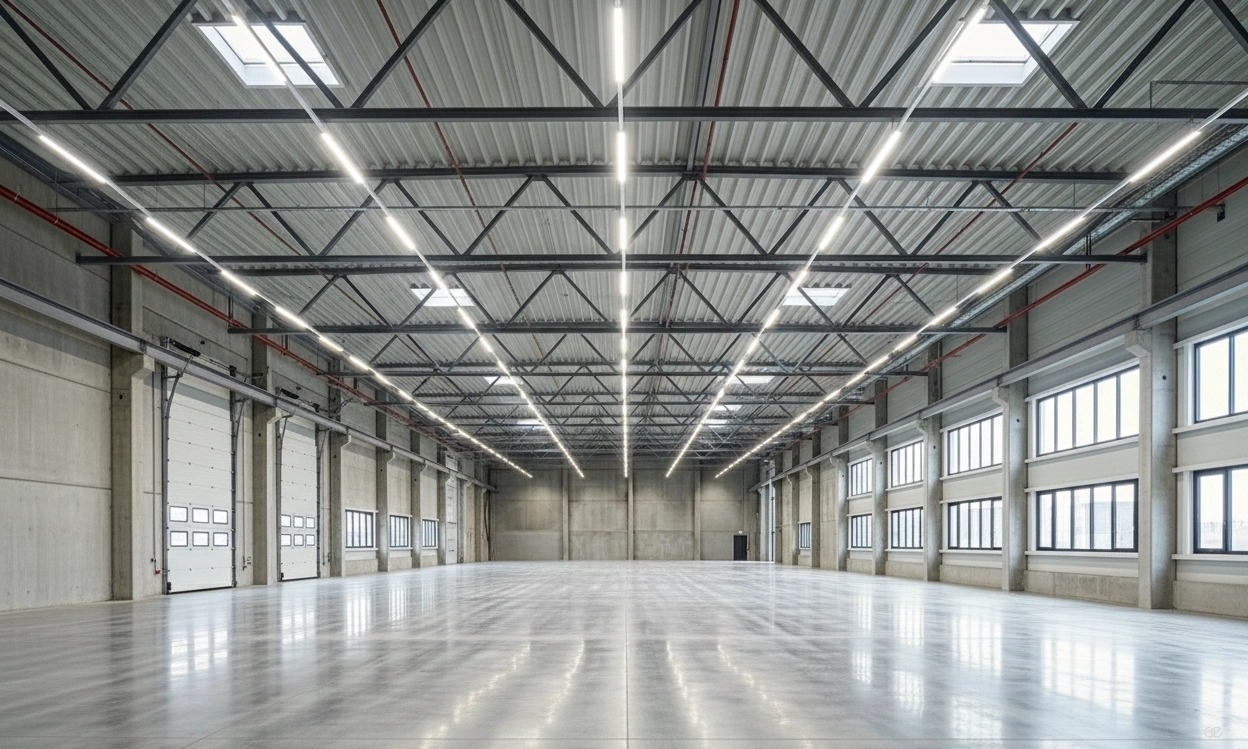
Key takeaways
- ✓ A practical example of a solution in real operation
- ✓ Connected to a specific service or technology
- ✓ Suitable for companies, construction sites, campuses and public buildings
In production areas, warehouses and offices, we often see the same problem: lighting does not match the standards or the reality of the operation.
On paper, everything may look “functional enough”. In practice, the result can be very different:
- insufficient lighting intensity,
- poor uniformity,
- glare affecting employees,
- unnecessary risk during health and safety checks,
- lower safety, performance and comfort at work.
Buildings are of different ages. Light fittings are in different technical condition. Quite often, the installation is a mix of older technologies, partial upgrades, non-professional modifications and operational compromises.
But the responsibility always remains with the building operator.
That is why it makes sense not to wait for a problem, inspection or accident. The most practical first step is a basic lighting audit, which quickly identifies weak points and shows what is worth solving.
Why correct lighting matters more than most companies think
Lighting is not only about “being able to see”. In reality, it affects:
- workplace safety,
- risk of accidents,
- accuracy and quality of work,
- orientation speed in warehouses,
- employee comfort,
- eye fatigue and overall working conditions,
- results of health and safety inspections,
- energy consumption and operating costs,
- maintenance frequency and service interventions.
Where there is too little light, error rates increase, visual checks become harder, work slows down and fatigue rises. Where there is enough light but it is poorly distributed, shadows, transitions and glare create almost the same operational burden.
And this is not just a production issue. It matters just as much in:
- warehouse halls,
- picking, packing and dispatch areas,
- offices,
- reception areas,
- corridors,
- technical rooms,
- outdoor yards and access roads.
Where companies most often make mistakes
In practice, several problems repeat again and again.
1. Lighting was built gradually, without an overall concept
A few luminaires were replaced in one area, some were added elsewhere, old discharge lamps remained in another section and new LED panels appeared somewhere else. The result is a mix of technologies without one clear lighting concept.
2. The only question is “does it shine?”, not “does it shine correctly?”
A working light does not automatically mean the workplace meets the requirements of the activity. What matters is not only the amount of light, but also distribution, direction, glare, colour rendering and behaviour over time.
3. Uniformity is underestimated
A very common mistake: directly under the luminaire the light level is too high, but between luminaires there are darker areas. At first glance the building “has lighting”, but the workplace is visually uncomfortable and often unsuitable.
4. Glare is ignored
Glare can be a major problem in production, warehouses and offices. Employees have to adapt, comfort drops, fatigue increases and concentration suffers.
5. Outdoor areas are handled too roughly
Outdoor lighting is often designed with the mindset “as long as something is visible”. But for roads, loading areas, yards or entrances, safety, orientation and operational certainty matter.
6. The real condition is not regularly assessed
Many operations simply do not know whether their lighting still matches today’s use of the building, because it has not been measured or evaluated for years.
What standards say — and why lux alone is not enough
For indoor workplaces in Europe, lighting is commonly assessed according to EN 12464-1, which deals with lighting for indoor work places. Outdoor work areas and other environments may require related standards and technical requirements depending on the type of operation.
The important point is that the standard is not only about “how many lux you measure”.
A properly designed lighting system is assessed using several parameters:
- maintained illuminance,
- lighting uniformity,
- glare limitation,
- colour rendering,
- suitability for the specific visual task,
- operational and safety context.
In other words: meeting one number is not enough. Lighting must work as a complete system.
Typical requirements by type of operation
Exact values always depend on the activity and the applicable assessment, but in practice the requirements are often roughly in these ranges:
| Area / activity | Typical focus |
|---|---|
| Corridors, communication areas, less demanding spaces | lower lighting levels and safe movement |
| Warehouse aisles and basic storage areas | low to medium levels depending on operation |
| Picking, packing and dispatch | higher focus on orientation and detail |
| Standard production and assembly | medium to higher levels according to precision |
| Quality control and fine assembly | significantly higher visual requirements |
| Offices and administrative work | comfort, uniformity and glare limitation |
That is why it is not wise to copy one universal number from the internet. What matters is what really happens in the space.
Czech and European standards vs. international practice
This topic is important for SEO and for customer trust: companies often want to know whether the Czech approach differs from other countries.
Czech Republic and most of Europe
In the Czech Republic, workplace lighting is based primarily on European standards, especially the EN 12464 series. That means the basic principle is very similar to many other European countries.
Germany
In Germany, practical workplace conditions, ergonomics and health and safety links are strongly emphasised. The approach is often very practical: not only the table value is assessed, but also the real use of the space.
United Kingdom
British practice often places strong emphasis on comfort, user experience and the operational quality of lighting, not only on theoretical compliance with minimum values.
United States
In the United States, different methods and recommendations are used more often, with greater focus on industry guidance and the practical needs of each operation. The approach may differ, but the principle is similar: lighting must match the activity and safety requirements.
What this means for Czech companies
The good news is that the Czech environment is not behind. The worse news is that in many buildings the real lighting still does not meet either today’s standards or today’s operational needs.
When lighting does not match the operation, it is not just a technical issue
Companies often see lighting as a technical item. In reality, it directly affects business operations and management.
Poor lighting can mean:
- higher risk of workplace accidents,
- lower work performance,
- problems during internal or external inspections,
- higher service costs,
- unnecessary energy consumption,
- lower employee comfort,
- weaker impression on customers, visitors or auditors.
In offices and commercial spaces, there is also the representative effect. A poorly lit interior does not look professional. A well-designed lighting solution improves how the entire space is perceived.
Modern LED lighting in production: performance, safety and lower operating costs

In production halls, high-quality LED lighting makes sense not only because of energy savings, but mainly because of:
- better visibility at workstations,
- improved uniformity,
- reduced shadows,
- better detail control,
- lower maintenance requirements,
- more reliable operation.
A correct design is not just a one-to-one replacement of old luminaires. It is necessary to consider:
- mounting height,
- spacing of luminaires,
- the type of operation,
- work surfaces,
- environmental resistance,
- service access,
- connection to the electrical installation,
- potential connection to switchboards,
- long-term service and maintenance.
Outdoor site lighting: safety, orientation and operation after dark

Outdoor site lighting is often underestimated, even though mistakes here can be very costly.
At entrances, handling areas, industrial sites, sawmills, storage yards or technology areas, lighting must support:
- safe movement of people,
- orientation of vehicles and machinery,
- loading and unloading,
- overview of the space,
- operational reliability at night and in poor conditions.
Typical problems include:
- dark edges of the site,
- very strong light in one place and weak light elsewhere,
- unsuitable luminaire angle,
- glare for drivers or workers,
- obsolete poles or low-efficiency luminaires.
If you are planning outdoor lighting for roads, parking areas or an industrial site, it is worth connecting the project with public and site lighting.
Lighting for commercial and social areas: when “enough light” is not enough
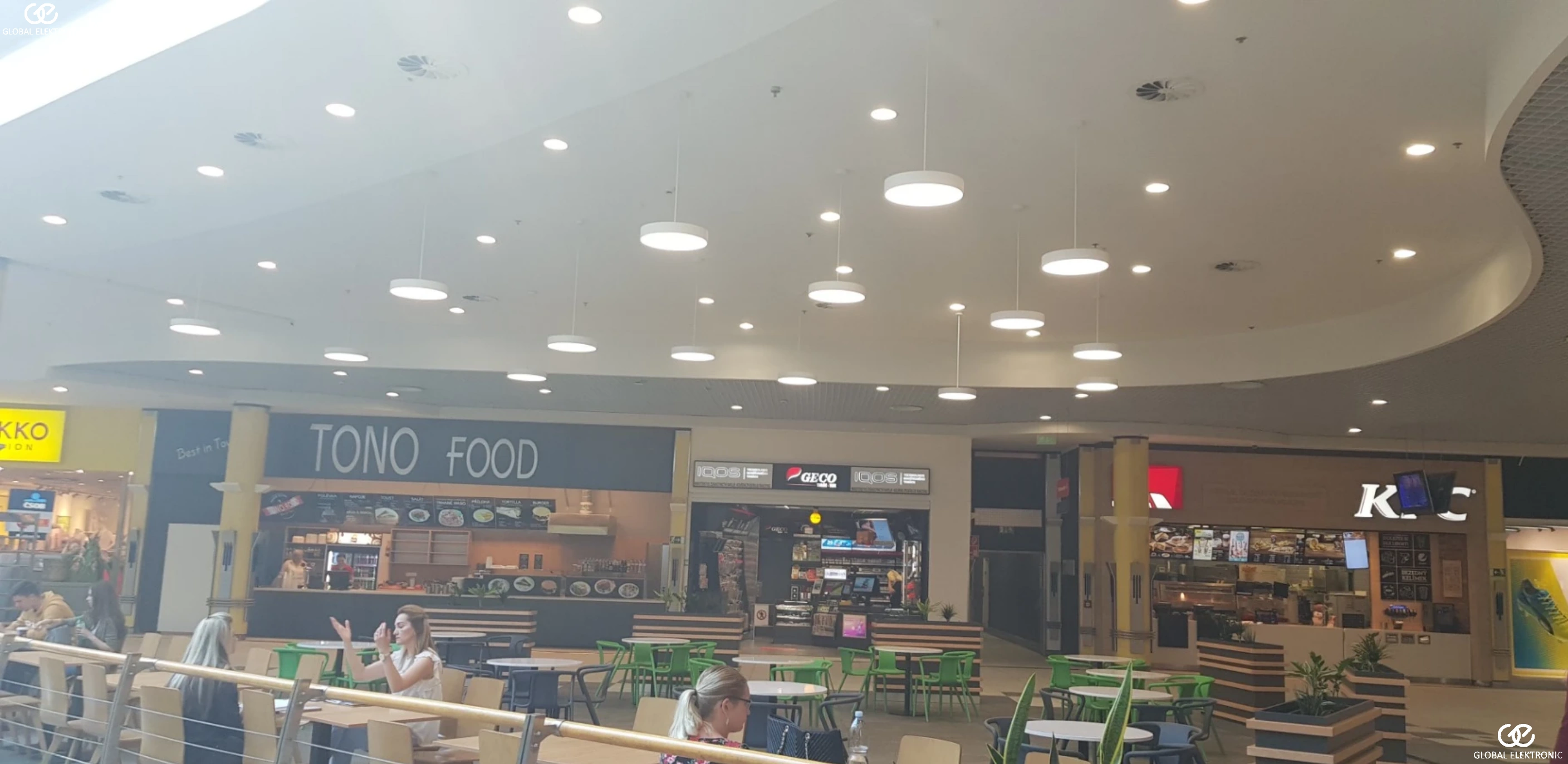
In retail and food court zones, lighting is not only about compliance. It also affects atmosphere, visitor orientation and the overall impression.
Typical spaces include:
- food courts,
- passages,
- reception areas,
- waiting zones,
- showrooms,
- shared spaces in commercial buildings.
Correct lighting helps to:
- guide people naturally through the space,
- make the area more pleasant,
- increase the feeling of safety,
- improve the visual quality of the interior,
- strengthen the overall impression of the building.
This is exactly where the difference between “some light” and lighting that truly works becomes visible.
Why start with a lighting audit
If a company has an older building, a mix of different luminaires or a long-neglected lighting system, the best first step is a lighting audit.
It is often the fastest and safest way to find out:
- what the real lighting condition is,
- where the risk areas are,
- whether lighting matches the type of work,
- where performance or energy is being wasted,
- what should be solved immediately,
- what can be solved in stages,
- where modernisation makes business sense.
A good audit should not be a report that ends up in a drawer. It should give the operator a clear answer:
- Where the problem is
- How serious it is
- What to do about it
- What benefit it brings to the operation
How a lighting audit typically works
We prepare audits in a way that gives the customer a practical output, not just theory.
1. Site visit and understanding of the operation
It is not enough to know the hall from a floor plan. It is important to understand how people actually work in the space.
2. Assessment of the current condition
We assess the technical state of luminaires, light distribution, problematic areas, electrical connections and operational context.
3. Identification of risks and weak points
We focus on safety, comfort, error risk, operating logic and potential issues during inspections.
4. Proposal of adjustments or modernisation
We recommend what can be adjusted, what should be replaced and where a complete modernisation makes sense.
5. Implementation steps
Where needed, we connect the audit with design, supply, installation, electrical inspections and future service.
Reduce risk without an unnecessarily high one-time investment
Modernising lighting does not always have to mean one large immediate investment.
In many buildings, a smart approach can be used:
- in stages,
- by zones,
- according to operational priorities,
- starting with the highest-risk areas,
- or using a model that spreads costs over time.
This means a company can start reducing risk and addressing the issue in time without immediately rebuilding the entire building.
The biggest mistake is waiting too long. Then it is no longer planned modernisation, but emergency problem-solving.
Common signs that lighting should be addressed
If you recognise any of the points below, a lighting audit is likely worth considering:
- employees complain about poor visibility,
- shadows and dark spots appear in production or storage areas,
- office lighting feels unpleasant or causes glare,
- the building has a mix of old and new luminaires,
- the outdoor site is unclear at night,
- you are planning reconstruction or modernisation,
- maintenance and replacement costs are increasing,
- you want to reduce energy consumption,
- a health and safety inspection is expected,
- you are simply not sure whether the condition is still acceptable.
FAQ: what companies ask most often
Do we need to deal with lighting if it still “works”?
Yes. Functional does not automatically mean suitable. Many operations have lighting that works, but is insufficient, uneven or uncomfortable.
Is a lighting audit suitable for older buildings?
Especially there. Older buildings often combine outdated technology, later modifications and an operation that has changed over time.
Does an audit make sense for offices?
Yes. In offices, not only output matters, but also comfort, glare reduction and long-term employee well-being.
Can modernisation be done in stages?
Yes. In many cases, phased modernisation is smarter than replacing everything at once.
Do you also handle outdoor site lighting?
Yes. We design solutions for outdoor areas, entrances, roads, parking areas and operational yards.
Can you connect lighting with electrical installation and service?
Yes. We can handle electrical installation, switchboards, inspections and service and maintenance, so the customer does not have to coordinate multiple suppliers.
Correct lighting is not a detail. It is part of safe and functional operation.
In production, warehouses and offices, lighting is often ignored until the problem becomes obvious. But with lighting, late action is often more expensive than timely assessment.
If your lighting:
- does not meet standards,
- does not match real operation,
- increases risk,
- reduces comfort,
- or unnecessarily increases operating costs,
then it makes sense to start now.
Do not wait for an inspection, complaints or an accident. Start with a basic lighting audit.
Are you dealing with lighting in production, a warehouse, offices or an outdoor site? Explore our industrial and commercial lighting, public and site lighting, electrical inspections or service and maintenance. We can prepare a lighting audit, proposal and full implementation.
Solution consultation
Working on a similar project?
Get in touch with us. We will suggest a suitable technical solution based on the location, operation and requirements.
Related service
This article is related to Our services
If you are dealing with a similar project in practice, continue to the service detail or send us the basic project parameters.
Keep reading
Related articles

Electrical inspections for companies, schools, apartment buildings and homes: why not wait for a fault
Electrical inspections for companies, schools, apartment buildings and homes: initial and periodic inspections, appliance testing, risks and service.

Custom switchboard for the exact building: why universal solutions are not enough
Custom switchboards for companies, homes, schools, PV and operations. Why design, production, labelling, testing and service matter.
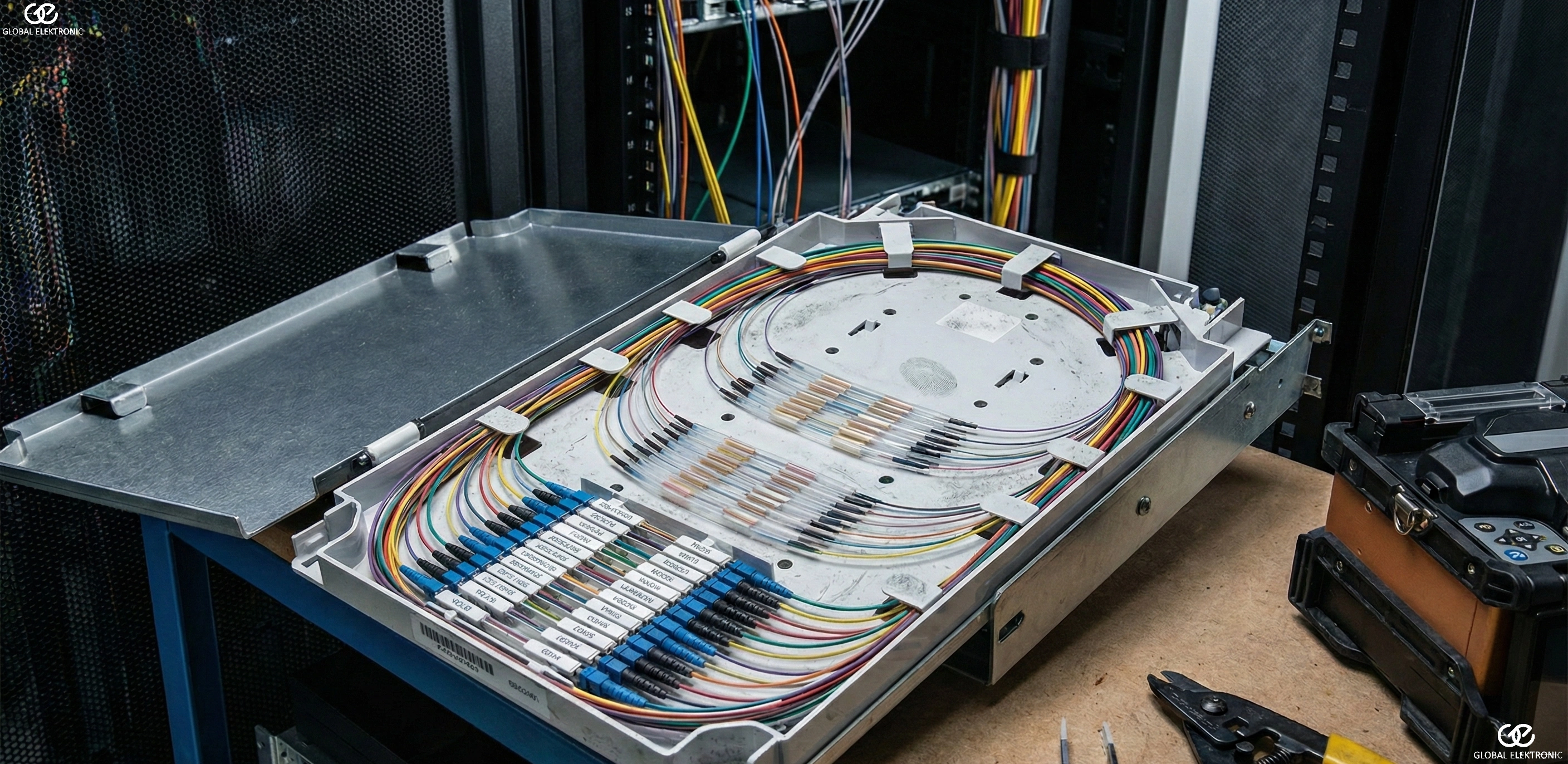
Fibre optic links for companies and development projects: design, pulling, splicing and testing
Fibre links for companies and developers: route design, pulling fibre, splicing, outdoor routes, PV, racks and fibre testing.
